
Tips on Helping Orphaned Baby Raccoons
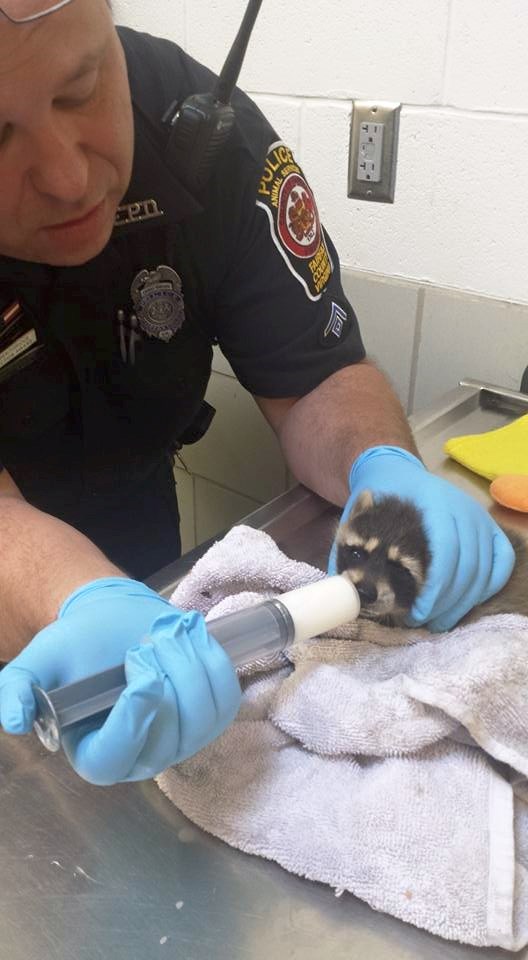
Spring is the time when wildlife rehabilitators, Animal Control Officers, and animal caretakers receive the most calls about baby wildlife. In Fairfax County, raccoon kits or cubs are frequently found causing residents to seek help from wildlife professionals to treat or raise young raccoons that appear to be orphaned or abandoned.
Although the urge to rescue baby animals is well-intended, survival rates of rehabilitated animals are often low. If you come across a baby raccoon and feel the need to intervene, we offer guidelines below to determine if the animal needs help and steps to take until the animal is in the care of a licensed wildlife rehabilitator.
Signs that an animal needs help:
- Shows signs of flies, worms or maggots, which look like grains of rice;
- Was caught by a cat or dog;
- Is bleeding or shows signs of trauma;
- If the parents are known to be dead;
- Is very cold, thin or weak or;
- Is on the ground unable to move.
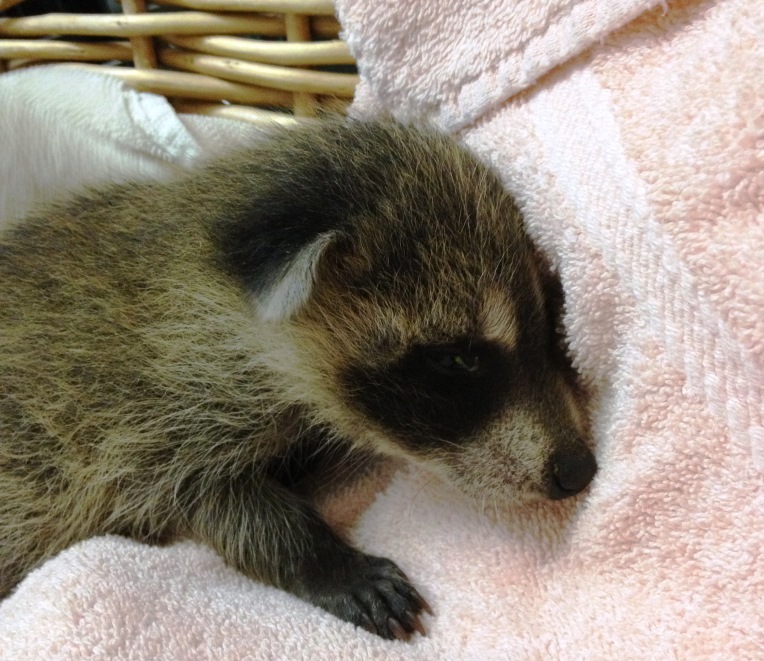
Raccoon babies that are warm, furred and uninjured should be left in the area where they were found to allow the mother a chance to reunite with them after dark. Put a laundry basket upside down over the animal (with a light weight on top) and monitor it for a few hours up to a full night to see if the mother returns. If the baby raccoon has been seen alone for more than a few hours or is still there in the morning, it has probably lost its mother.
Contact a licensed wildlife rehabilitator for further assistance and instruction.
Do not touch any baby wild animal unless it’s necessary to transport. Heavy gloves should be worn at all times if handling is necessary. Keep your hands away from its mouth as there is always potential for rabies among wild animals, including baby raccoons. Place it in a secure, well-ventilated cardboard box lined with an old T-shirt or soft cloth and keep it in a warm, dark and quiet place. Do not give the baby raccoon food or water.
To locate a licensed wildlife rehabilitator, contact the Virginia Wildlife Conflict Helpline toll-free at 1-855-571-9003 or at http://www.dgif.virginia.gov/wildlife/injured/rehabilitators.asp.
Guidelines included in this release were provided by the Humane Society of the United States, Wildlife Rescue League, and the Virginia Department of Game and Inland Fisheries.
 Fairfax County Police Department News